What GRS is
The Global Recycled Standard (GRS) is an international, voluntary certification for products containing recycled material, owned and maintained by Textile Exchange, a nonprofit standards organization focused on textile materials. GRS certifies two things at once: the recycled content of the material, and the social, environmental and chemical practices used at every stage of processing that material into a finished product.
For regenerated PET and PP fiber, GRS is the certification buyers ask for most often, because it is independently audited rather than self-declared, and because the certificate travels with the shipment as a specific, traceable document rather than a general marketing claim.
Chain of custody: the part that actually matters
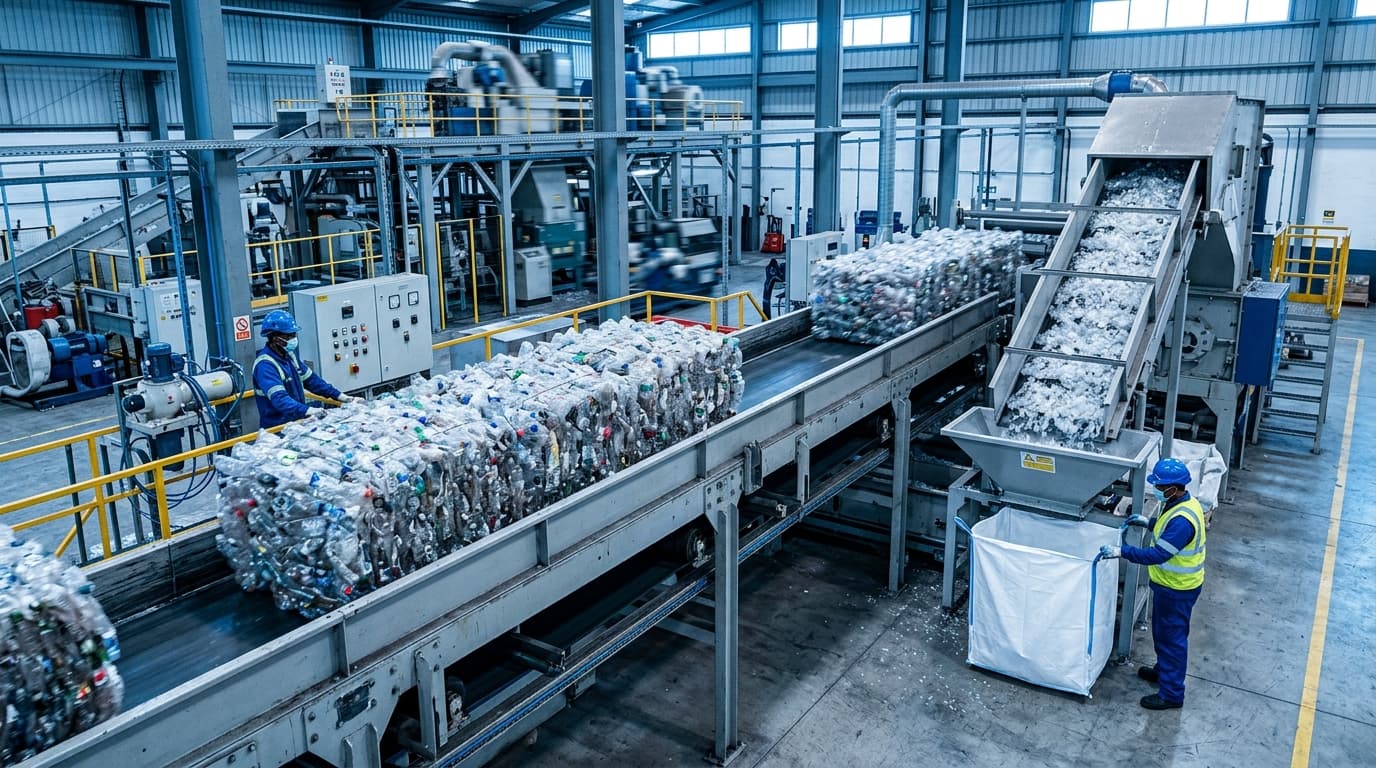
The core mechanism behind GRS is chain-of-custody tracking. Every facility that handles GRS-certified material, from the recycler processing waste bottles or textile waste into flake or pellet, through the fiber extrusion plant, to any subsequent converter, must hold its own GRS certification and issue a Transaction Certificate (TC) for each shipment of certified material it sells onward.
This means a GRS claim on a bale of regenerated PET fiber is not a claim about the fiber alone; it is a claim backed by a documented, auditable chain running back through the extrusion facility to the recycling facility that first processed the waste input. If any link in that chain is not itself GRS-certified, the material cannot legitimately carry a GRS claim forward, even if the recycled content is genuinely there.
This is exactly why FiberTrade requires GRS certification and the associated Transaction Certificate to be attached to the listing record for any regenerated-content grade, rather than accepting a supplier's recycled-content percentage as a standalone claim.
Recycled content thresholds
A product needs a minimum of 20 percent recycled material by weight to qualify for GRS certification at all. Above that floor, GRS requires the exact recycled content percentage to be stated and verified rather than rounded or estimated; a fiber certified at 100 percent recycled content must actually contain 100 percent recycled input, verified through mass-balance or physical tracking of material through the supply chain.
Most regenerated fiber traded on FiberTrade sits well above the minimum threshold: bottle-flake-derived rPET fiber is commonly 100 percent recycled content, while blended or semi-virgin grades will state a specific percentage, such as 30 percent or 50 percent recycled, rather than using "recycled" as an unqualified label. See our virgin vs semi-virgin vs regenerated fiber guide for how these origin categories differ beyond certification status.
What GRS certifies beyond recycled content
Because GRS certifies facilities as well as materials, certified sites are also audited against social criteria (covering labor practices) and environmental criteria (covering wastewater treatment, energy use and chemical management), plus a restricted substances list covering hazardous chemicals used in processing. A GRS certificate is therefore a broader assurance than a simple recycled-content percentage; it says something about how the material was processed, not just what it is made of.
How to tell a real GRS claim from a marketing claim
A genuine GRS claim comes with a scope certificate for the facility (listing the certified product categories and recycled input types) and a Transaction Certificate for the specific shipment or lot, both of which are issued by an accredited third-party certification body, not by the supplier itself. If a supplier describes material as "GRS certified" but cannot produce a current Transaction Certificate tied to that specific lot, the claim has not actually been verified for that shipment, regardless of whether the facility holds a GRS certificate in general.
Buyers sourcing regenerated fiber for brand-owner sustainability programs, in particular, should confirm the Transaction Certificate matches the lot being purchased, since certification is issued per-shipment through the chain-of-custody system rather than as a blanket, ongoing claim independent of any specific transaction.